Basketball has one of the shortest windows of any high school sport between "let's order" and tip-off, and you're deciding on a brand right as that clock runs out. Adidas and Under Armour are both premium, licensed team programs we carry in full — so we have no reason to steer you toward one over the other. Here's the honest, brand-neutral breakdown we'd give a coach or athletic director who called us today.
You're at the edge of the safe ordering window
Our own basketball uniform buying guide lays out the calendar: custom basketball uniforms typically take 6 to 10 weeks from approved artwork to delivery, and CIF winter-sport practice generally opens in November. Ordering by early September is the safest margin. If you're reading this in mid-September without a purchase order in, you're not out of time, but you should be picking a brand and a rep this week, not next month — ask about a rush production slot when you request quotes. Confirm your section's exact winter-sport start date with CIF before you lock a delivery deadline.
Where the two brands actually differ
Above the budget/non-branded tier, the gap between Adidas and Under Armour isn't quality — both are legitimate performance brands worn at the high school, college, and pro level. What actually moves a buying decision is fit philosophy, sizing range, and how each brand's basketball line is built.
| Factor | Adidas | Under Armour |
|---|---|---|
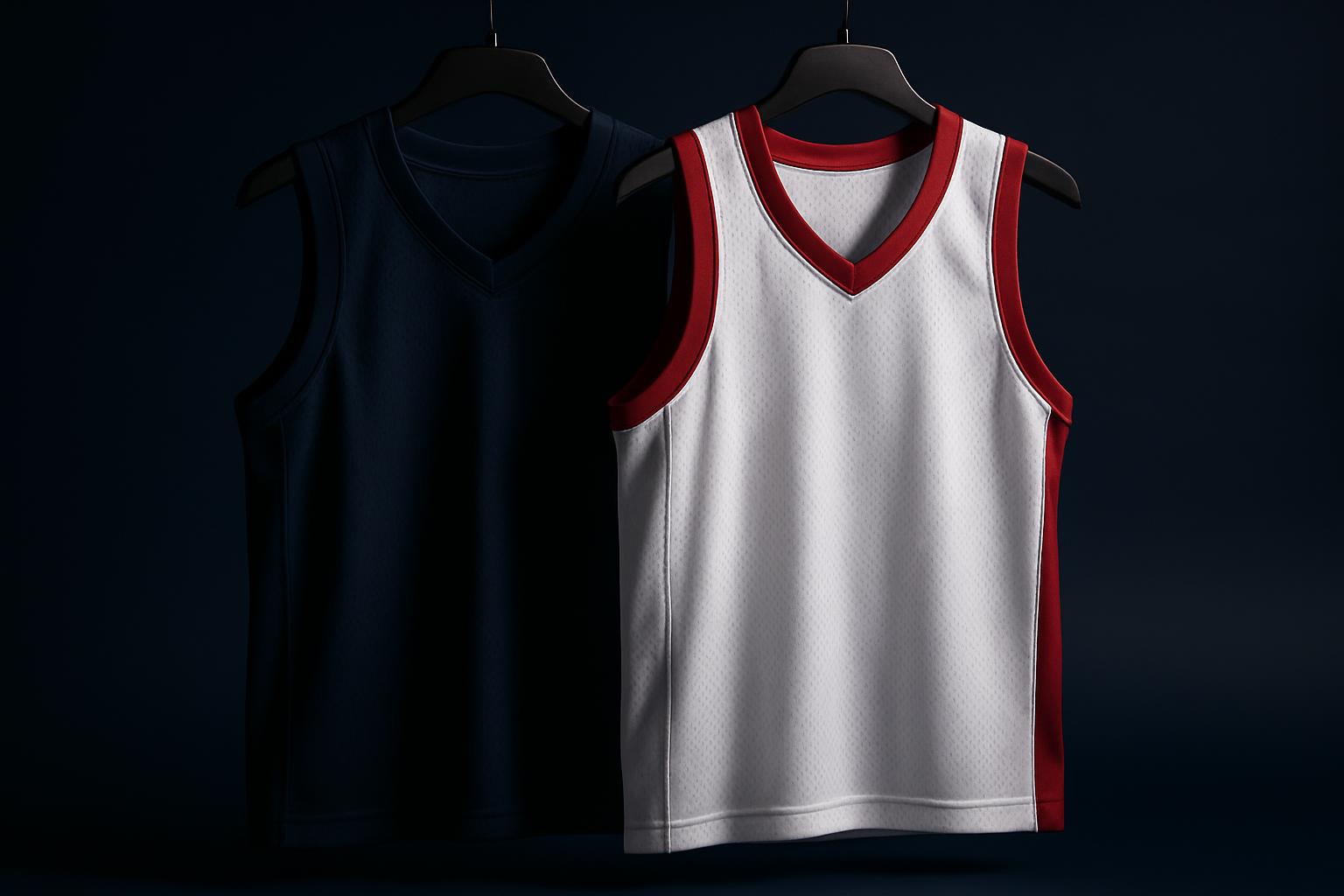
| Fit approach | Traditional athletic cut, broad stock size run (helps a roster with outlier heights) | Compression-mapped, closer athletic fit |
| Custom templates | Deep sublimation template library | Strong templates, slightly narrower range |
| Fabric feel | Established performance mesh | Lighter game-day weights, known for moisture control |
| Best fit for | Rosters with a wide height range or programs wanting maximum design flexibility | Programs prioritizing a tighter, more tailored silhouette |
A roster that runs from a 5'2" point guard to a 6'8" post player often leans on Adidas's wider stock size run to avoid custom grading on every outlier. A program more focused on a tailored, athletic look under the jersey often leans Under Armour. Neither is the "correct" choice — it's a fit and design preference, not a quality gap.
Reversibles, templates, and turnaround
Both brands support fully custom sublimated jerseys and shorts built from your team's colors and logo, and both offer reversible options for practice and lower squads. As covered in the buying guide, reversibles aren't required by rule and work well for JV or freshman scrimmage sets, but varsity game jerseys still need a true light and true dark set — a reversible can't carry clean sewn numbers on both sides the way two dedicated sets can. Adidas generally has the wider out-of-the-box template selection, which can shorten the design phase if you want a proven look fast; Under Armour's range is smaller but still deep enough for a distinctive kit. Production timelines run on a comparable clock for either brand once artwork is approved.
Price: brand matters less than you'd think
A common assumption is that one brand is flatly cheaper — in practice, price is driven far more by decoration method, roster size, and whether you're bundling reversibles, shooting shirts, and warmups into the same purchase order than by the Adidas-vs-UA choice alone. See our basketball uniform cost guide for real per-player ranges, and get both brands quoted against your exact roster before assuming either one is the budget option.
Practical tip: because we carry both brands, we can put an Adidas quote and an Under Armour quote side by side against your exact roster and budget — the comparison only means something once it's built around your team, not a generic price sheet.
The legal-number rule applies the same to both
Under NFHS basketball rules, legal jersey numbers are built only from the digits 0 through 5 — numbers using 6, 7, 8, or 9 aren't allowed, a rule tied to how officials signal fouls to the scorer's table by hand. This applies identically regardless of which brand you order from, so it's a design-proof check, not a brand consideration. Confirm the current season's rule with your league before finalizing rosters.
Mixing brands on one program
You don't have to standardize on one brand for the whole program. Some schools run Adidas for varsity and Under Armour for JV, or use one brand for basketball and the other for a different sport based on fit and budget for that roster. What we'd steer away from is mixing brands within the same visible uniform set — jerseys and shorts from different brands can have slightly different cuts and color reproduction, which shows on the court under gym lighting.
How to decide before the calendar closes in
- Get both fit kits fast. With the window this tight, try Adidas and Under Armour sizing samples on a handful of players this week rather than debating specs on paper.
- Ask what boosters and players already own. Matching an existing brand keeps colors and shooting-shirt inventory consistent season to season.
- Price both against the same roster. A single-brand quote tells you nothing about value — get both, with reversibles and shooting shirts included, in one comparison.
- Confirm the rush option now. If you're past early September, ask your rep directly whether a rush slot gets you to November — don't assume it and find out in October.
Working with a dealer that carries both
An independent dealer that only sells one brand has a built-in incentive to steer you toward it. At National Sports Apparel we carry full team catalogs from both Adidas and Under Armour — plus New Balance, Puma, and other lines — so our job is matching your program to the right fit, size range, and budget, not the brand that pays us more. We've outfitted California high school, club, and college basketball programs since 2009, with no order minimums for a full three-squad order or a mid-season reorder.