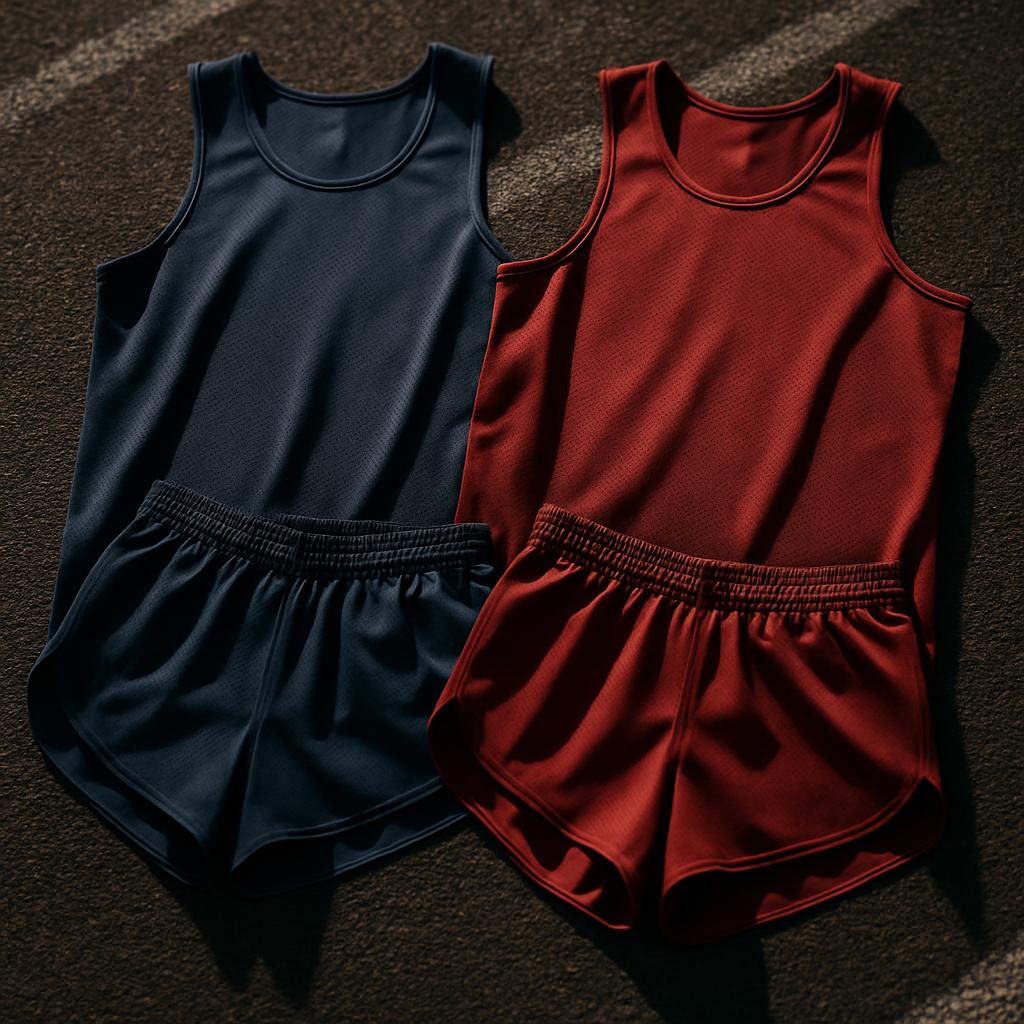
Cross country uniforms look simple — a singlet and a pair of split-leg shorts — but the decision is easy to get wrong on timing, fit, and rules that don't apply to any other sport your program runs. Most CIF sections open fall practice in mid-August, which means teams that haven't ordered yet are working against the clock right now. Here's what California athletic directors and coaches need to know before placing that order.
Know the uniform rules first
Cross country and track share the same NFHS uniform rule, and it's stricter about team consistency than most coaches expect. Every runner on a team must wear the same color and design of uniform, though the length of shorts or bottoms is allowed to vary between athletes. Bare-midriff tops and knotted hems aren't permitted, and any visible manufacturer logo or school name on an undergarment is limited to a small size (roughly 2¼ inches). Shoes need a distinct upper and sole, and any spikes are capped in length.
Rules are updated periodically by NFHS and interpreted by CIF sections, so confirm the current season's version with your section before you finalize art — a good team dealer will flag anything that's changed since your last order.
Quick take: the uniformity rule is the one that trips teams up most — every runner needs to match, so budget for the full roster in one order rather than filling gaps piecemeal over a few seasons.
What actually drives the cost
Cross country uniforms cost less than football or volleyball sets because there's less garment and simpler construction, but the same three variables move the price up or down.
| Cost driver | Budget-friendly | Premium |
|---|---|---|
| Singlet construction | Stock singlet, decorated | Fully custom sublimated |
| Decoration | Screen print / heat transfer | Sublimated all-over pattern |
| Brand | Quality non-branded | Adidas, Under Armour, New Balance |
| Extras | Team name only | Individual names, captain marks, warm-up sets |
Because the garment itself is inexpensive, decoration and brand are where most of the cost variation actually sits — a fully sublimated New Balance or Under Armour singlet in a school-specific pattern costs meaningfully more than a stock singlet with a heat-transferred school name, even though both are technically the same style of garment.
Sublimation vs. screen print for singlets
Sublimation dyes color into the fabric itself, so it never cracks or peels and supports unlimited colors and gradients — the standard for a fully custom look and the only realistic way to put a photo-quality pattern across a lightweight mesh singlet. Screen print or heat transfer on a stock singlet is the budget and speed option: lower cost, faster turnaround, and a perfectly legal, clean look for programs that don't need a one-of-a-kind design. If you're ordering late for this season, screen-printed stock is usually the realistic path to having uniforms in hand before your first meet.
Fabric and fit for distance running
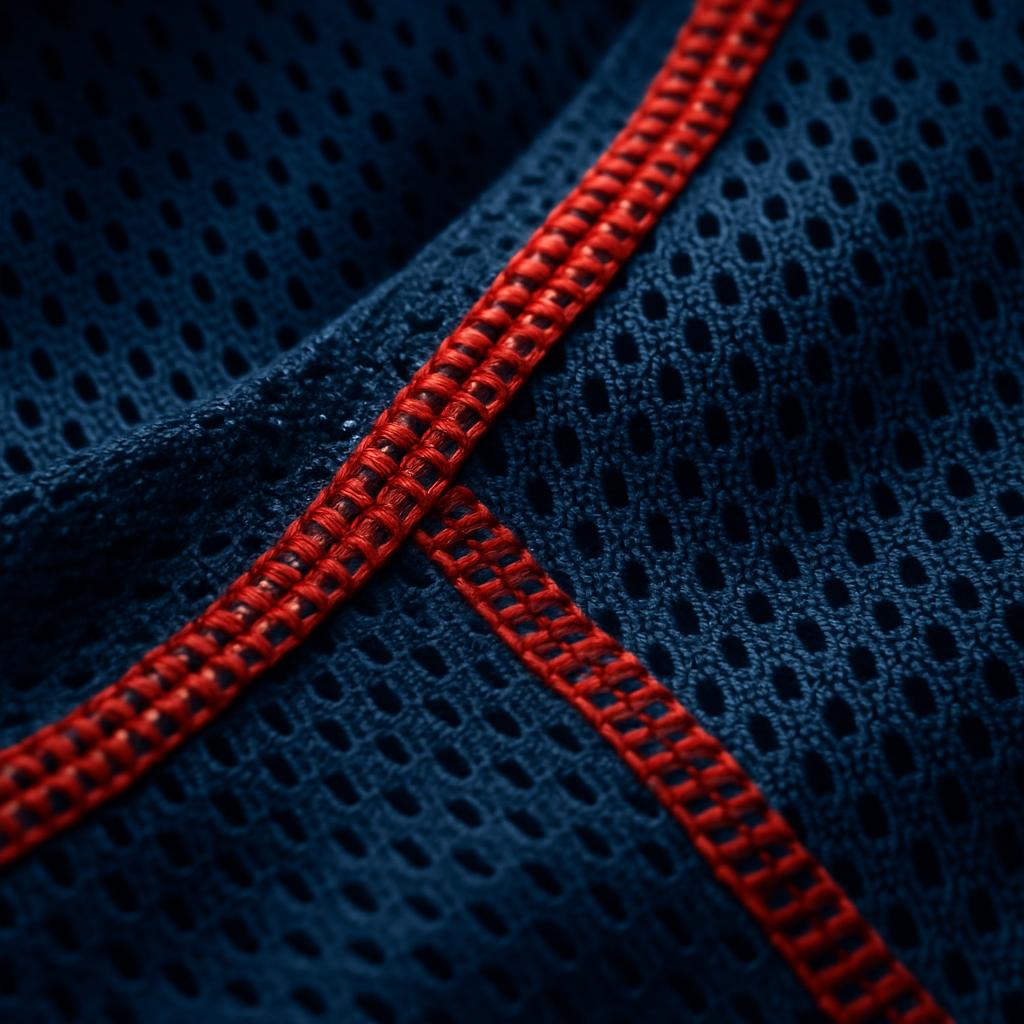
Cross country singlets are built differently than a football jersey or volleyball top: the priority is airflow and weight, not padding or abrasion resistance. Look for an open-knit or perforated mesh body, a racer-back or dropped-armhole cut that won't chafe on a 5K, and split-leg shorts with a soft brief liner or compression short underneath. Ask for a fit sample before committing — distance rosters run leaner and taller than most other sports, and a cut built for football won't drape the same way on a cross country body type.
Sizing a roster that skews lean and tall
Cross country and track rosters are often the largest on campus, and body types vary more than coaches expect. A few practices that keep sizing simple:
- Run a team-wide try-on with actual singlets and shorts rather than sizing off a generic chart — mesh singlets fit differently than a standard tee.
- Order a buffer of small and extra-small sizes; distance rosters skew leaner than most other sports' size curves.
- Keep JV and varsity in the same size run so uniforms can move between squads as the roster shifts through the season.
- Decide early whether freshmen and JV wear the same design as varsity or a simplified version — it changes the order count and the art files needed.
Our team uniform sizing hub has charts and a measuring guide, and the cross country entry on our equipment checklists covers what else belongs in the order beyond the singlet — spikes, warm-ups, and a team bag.
Branded or non-branded?
Running brands matter more here than in some other sports because fit systems differ noticeably. New Balance and Adidas both run deep custom-template libraries built specifically for distance apparel, with fabrics tuned for airflow over a race distance. Quality non-branded singlets deliver a clean, legal uniform at a lower price point and are common for JV and freshman squads or programs stretching a spirit-pack budget across the whole roster. Because we carry both, we can quote branded and non-branded side by side against your actual roster count.
The ordering calendar
Cross country's calendar is tighter than most fall sports because the season starts earlier. Most CIF sections open official practice in mid-August, with scrimmages and the first meets following within a couple of weeks — well ahead of football's late-August openers. For a fall season:
- April–May: finalize design and sizing for a fully custom sublimated singlet. This is the safe window.
- June–July: production. Stock-decorated orders placed here can still land before the season opens.
- Early-to-mid August: uniforms in hand before practice and the first meets begin.
If you're reading this in August and haven't ordered, you're not out of options — a stock singlet with screen-printed decoration turns around faster than a sublimated custom design and can still get your team on the line looking unified. Talk to your dealer about what's realistically achievable before your first meet rather than defaulting to mismatched hand-me-downs.
Working with a team dealer
Cross country gets less attention from big catalog dealers than football or basketball, which means programs often end up with whatever's fastest rather than what actually fits a distance roster. An independent team dealer who understands the uniformity rule, sizes for a lean roster, and can move fast on stock decoration when a season is already underway makes the difference. At National Sports Apparel we've outfitted California high school, club, and college programs since 2009 — with no order minimums, so a 20-runner club team gets the same attention as a 100-athlete combined varsity/JV roster.