How much do custom football uniforms cost?
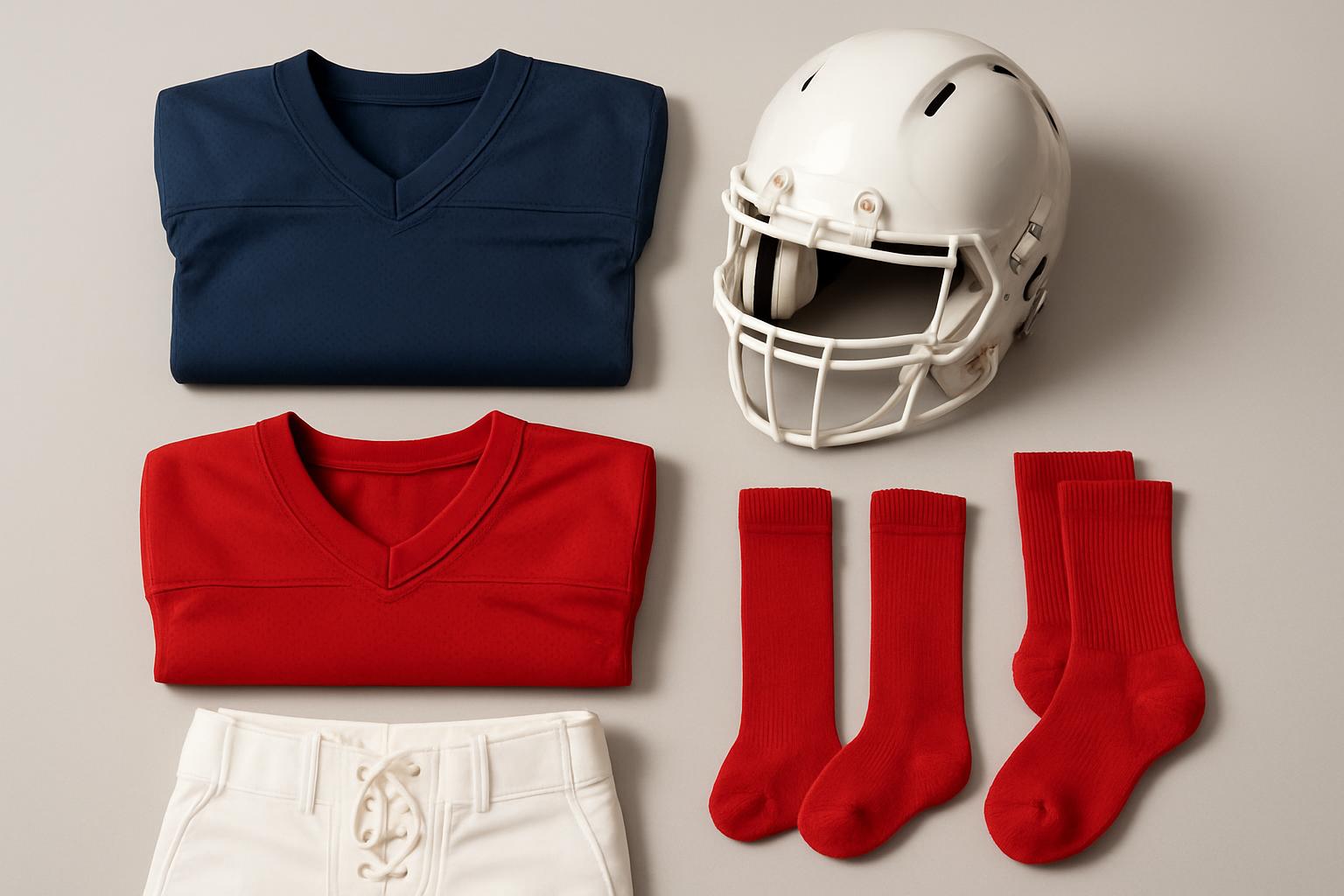
As of 2026, a custom football jersey-and-pants set commonly runs about $60–$90 per player for a budget non-branded set, $90–$130 for a mid-tier branded or sublimated set, and $130–$180+ for a fully custom Adidas or Under Armour set. These are market planning ranges, not a quote. Home and away sets, names, and decoration move the total.
"What's this going to cost?" is the first question every athletic director and booster treasurer asks — and the honest answer is "it depends," because a football uniform isn't one price, it's a set of choices. This guide gives you real planning ranges, shows exactly what moves the number up or down, and flags the costs teams forget until the invoice arrives — so you can budget with confidence and get a quote that holds no surprises.
The short answer: typical ranges
Across the market, a custom football jersey-and-pants set for a high-school program commonly lands in these rough per-player ranges. Treat them as budgeting guardrails, not quotes — your real number depends on brand, decoration, and how many you order.
| Tier | What you get | Rough per-player range* |
|---|---|---|
| Budget | Quality non-branded set, screen-print or heat-transfer numbers | ~$60–90 |
| Mid | Stock branded or sublimated set, fuller customization | ~$90–130 |
| Premium | Fully custom sublimated Adidas / Under Armour, names + patches | ~$130–180+ |
*General market ranges to help you plan — not NSA pricing. Final cost varies by brand, decoration, quantity, and season. Get a quote for a real number.
What actually drives the price
Four levers move a football uniform quote more than anything else. Understand them and you can steer the budget instead of reacting to it.
1. Construction: stock vs. fully custom
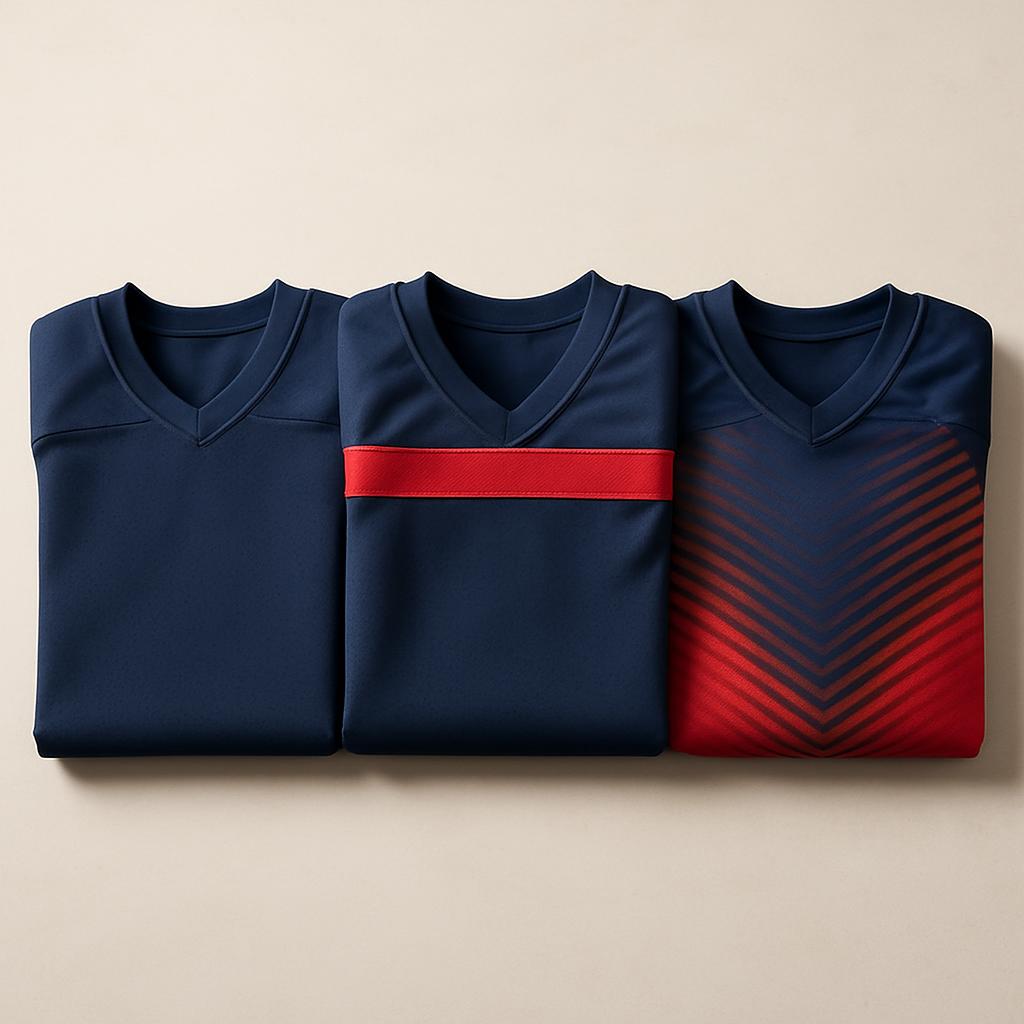
A decorated stock jersey is the economical route. A fully custom sublimated jersey — dyed with your exact colors, patterns, and numbers — costs more but gives an unlimited, never-crack finish.
2. Decoration: screen print vs. tackle twill vs. sublimation
Screen print and heat transfer are cheapest; sewn-on tackle twill is the durable, traditional Friday-night look and costs more; sublimation bakes unlimited color into the fabric at no per-color charge. We break these down in the football uniform buying guide. Sublimation, tackle twill, and screen print are compared in the decoration comparison.
3. Brand
Quality non-branded lines deliver a sharp uniform for less. Adidas and Under Armour custom programs sit higher but bring premium fabrics and signature looks. Because a dealer quotes both, you compare value rather than guess.
4. Quantity & minimums
Bigger orders lower the per-unit price. Watch minimums, too: many suppliers require 8–20 pieces per design. At National Sports Apparel there are no minimums, so a small reorder or a full three-squad program are both fine.
Remember: you likely need two sets
Under the NFHS rules California's CIF follows, home teams wear dark and visitors wear white — so most programs buy a home and away set. Budget for both from the start; a mid-season second order almost always costs more. (Details in the buying guide.)
The costs teams forget to budget
- Names & extras — player names, captain patches, and memorial decals are usually add-ons beyond numbers.
- A sizing buffer — order a few extra common sizes for call-ups and late additions. Our sizing hub helps you get the roster right the first time.
- Reorders — mid-season replacements at small quantities cost more per piece.
- The rest of the sideline — coaches' gear, spirit wear, and bags. Bundling them into one order often improves pricing, and a team store can even turn spirit wear into a fundraiser.
How to lower the cost without looking cheap
- Mix tiers by squad — varsity in a premium set, JV and freshman in budget sets from the same color family. The sideline looks unified; the budget stays sane.
- Order early — spring for fall — to avoid rush fees and stock-out substitutions.
- Bundle uniforms, coaches' gear, and spirit wear in one order.
- Ask for both a branded and a non-branded quote and compare value side by side.
Get a real number, not a guess
Ranges are for planning; a quote is for deciding. A team dealer prices your exact roster across brands and decoration methods so you see real options, not estimates. We've outfitted California programs since 2009, quote branded and non-branded together, and have no order minimums — so you can see what your program actually costs before you commit a dollar.