Water polo is one of the few sports where the uniform is also technical equipment — the suit has to survive being grabbed, stretched, and chlorinated for an entire season, and the caps are regulation gear with their own rulebook. Most CIF sections opened fall practice in late July with first contests in mid-August, so if your program is already in the pool without matching suits and legal caps, you're not alone. Here's what California athletic directors and coaches need to know before the next order.
Know the cap rules first
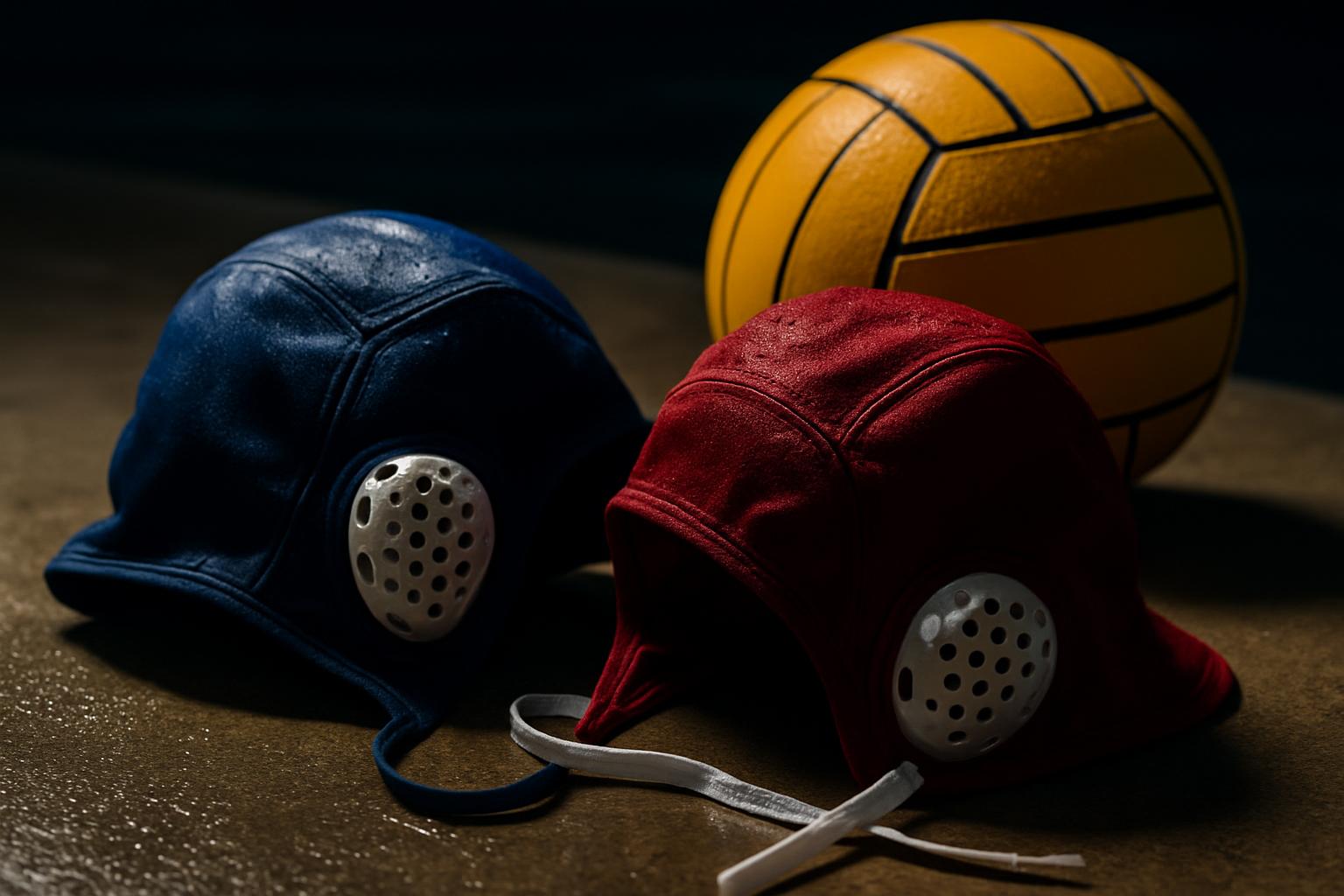
Water polo's uniform rules live almost entirely in the caps, and NFHS is specific about it. Every team needs two full sets: one white and one dark contrasting color. Dark caps can't be yellow, gold, orange, powder blue, light gray, pale green, or other light shades — the whole point is a clear visual contrast between teams and the ball. Cap numbers must be white, yellow, or gold and stay clearly visible, and field-player caps have to be clearly distinguishable from goalkeeper caps. Every player wears protective ear guards, colored to match the cap (dark on dark, white on white).
Rules are updated periodically by NFHS and interpreted by CIF sections, so confirm the current season's version before you finalize colors and numbering — a good team dealer will flag anything that's changed since your last order.
Quick take: cap rules are non-negotiable and specific about color — get your white/dark sets and numbering approved before you spend budget on custom suits.
What actually drives the cost
A water polo order has more moving pieces than most fall sports because the suit, the caps, and the practice/game gear are often bought separately. The same variables move price up or down across all of them.
| Cost driver | Budget-friendly | Premium |
|---|---|---|
| Suit construction | Stock team suit, decorated | Fully custom sublimated |
| Cap decoration | Solid color, printed number | Sublimated logo, custom numbering |
| Brand | Quality non-branded | TYR, Speedo, Turbo, Arena |
| Extras | Suits + caps only | Balls, goals, parkas, spirit packs |
Because competition suits use technical fabric rather than a printed graphic, the suit itself carries more of the cost than decoration does — the opposite of a screen-printed jersey sport. Caps are the cheaper, faster piece of the order and a reasonable place to add a custom logo even on a tight budget.
What to look for in a suit
Water polo suits take a beating that a typical team uniform never sees — constant grabbing, pulling, and chlorine exposure over a full season. Look for chlorine-resistant fabric (competition suits built with a higher-durability fiber blend hold color and shape far longer than a generic swim fabric that degrades in a chlorinated pool), reinforced or double-lined construction at the seams and straps, and a fit built specifically for water polo rather than a repurposed lap-swim suit. Boys' suits are typically briefs or jammers; girls' team suits are typically one-piece competition cuts. Ask for a fit sample before committing a full roster order.
Sizing a swim-built roster
Water polo suits fit differently than a jersey uniform, and coaches who size off a generic apparel chart usually end up reordering. A few practices that help:
- Run an in-water try-on where possible — competition suits are meant to fit snug for drag reduction, which reads as "too small" on a dry-land chart.
- Order a few spares per size run; suits see heavier wear-and-tear than most other uniforms and don't last as many seasons.
- Keep JV and varsity cap colors identical so caps can move between squads if a roster shifts mid-season.
- Budget separately for caps — they're sized more simply than suits and are the easiest piece to reorder if a set gets damaged.
Our team uniform sizing hub has general charts and a measuring guide, and the water polo entry on our equipment checklists covers what belongs in a full order beyond the suit — caps, balls, goals, and warm-ups.
Branded or non-branded?
TYR runs a dedicated water polo suit and cap program with team pricing and custom decoration, and it's the deepest brand catalog we carry for the sport. We also stock Speedo, Turbo, Arena, and KAP7 gear and balls through our water polo catalog. Quality non-branded suits deliver a legal, durable uniform at a lower price point and are common for JV squads or programs stretching a tight budget across the whole roster. Because we carry both, we can quote branded and non-branded side by side against your actual roster count.
The ordering calendar
Water polo's calendar is tighter on the front end than it looks, because technical suit fabric takes longer to produce than a printed jersey. Most CIF sections open official practice in late July, with the first contests following in mid-August. For a fall season:
- February–March: finalize suit design, cap colors, and sizing for a fully custom sublimated order. This is the safe window.
- April–June: production. Stock team suits with printed caps ordered here can still land before the season opens.
- Late July: gear in hand before practice and the first contests begin.
If you're reading this in August and your program is already in the pool without matching suits or a legal cap set, you still have options — stock suits and quick-turn cap printing move faster than a fully custom sublimated run and can get your team compliant and unified before your next contest. Talk to your dealer about what's realistically achievable this season, and put a February order on next year's calendar so you're not racing the clock again.
Working with a team dealer
Water polo gets less attention from big catalog dealers than football or basketball, and the sport's technical fabric and cap rules trip up dealers who don't outfit it regularly. An independent team dealer who knows the difference between a lap-swim suit and a competition suit — and who can move fast on stock decoration when a season is already underway — makes the difference. At National Sports Apparel we've outfitted California high school, club, and college programs since 2009 — with no order minimums, so a 16-athlete club team gets the same attention as a full varsity/JV roster.