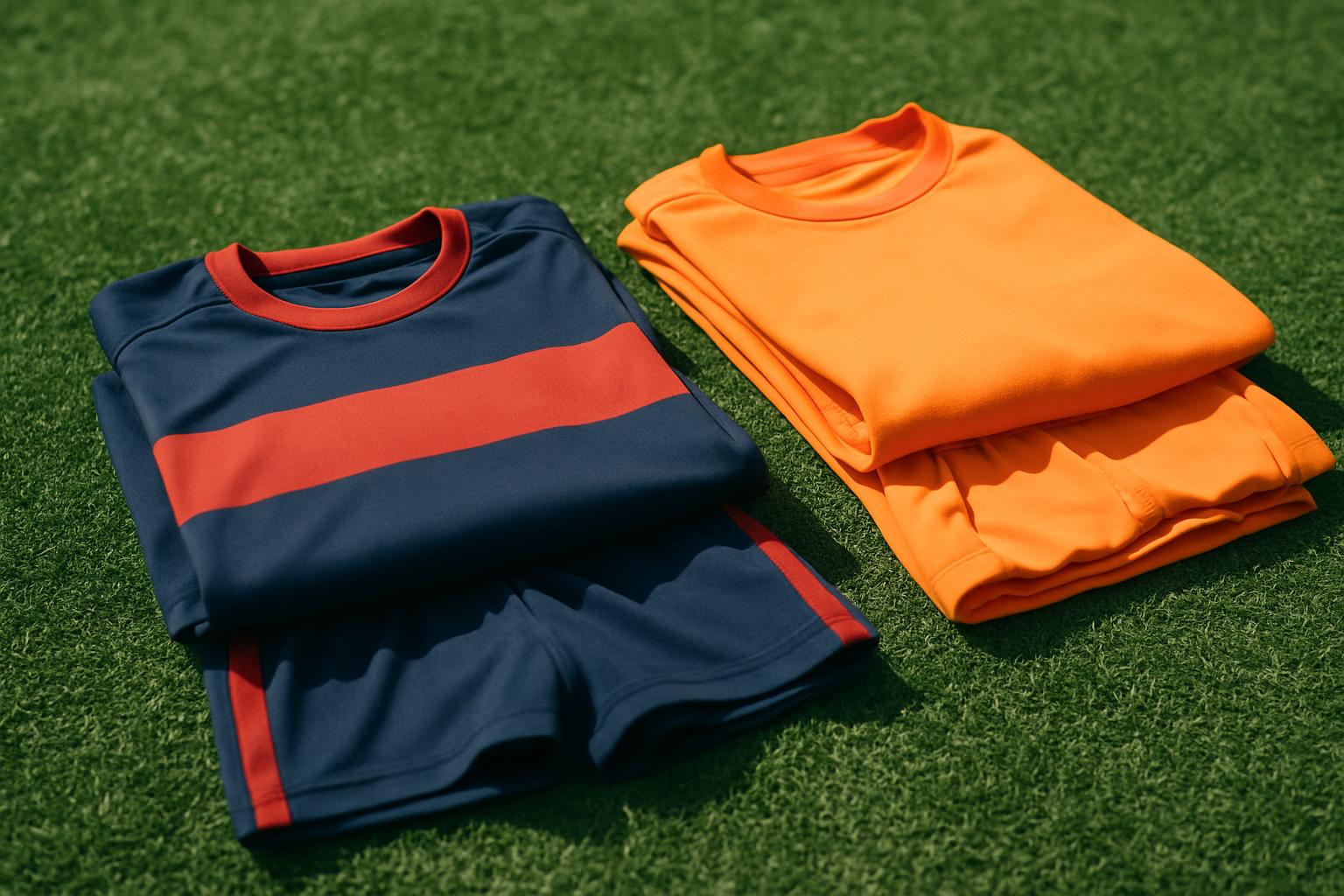
In most CIF sections, soccer practice opens in mid-November — which puts California athletic directors and booster treasurers pricing out kits right now, in September, not waiting until October. This guide gives you real per-player planning ranges, the line item first-time budgets almost always forget (the goalkeeper kit), and the levers that move the number, so you walk into a quote knowing what to expect.
The short answer: typical ranges
Across the market, a custom soccer jersey, short, and sock kit for a field player commonly lands in these rough per-player ranges. Treat them as budgeting guardrails, not a quote — your real number depends on brand, decoration, and how many you order.
| Tier | What you get | Rough per-player range* |
|---|---|---|
| Budget | Quality non-branded kit, screen-print or heat-transfer numbers | ~$45–65 |
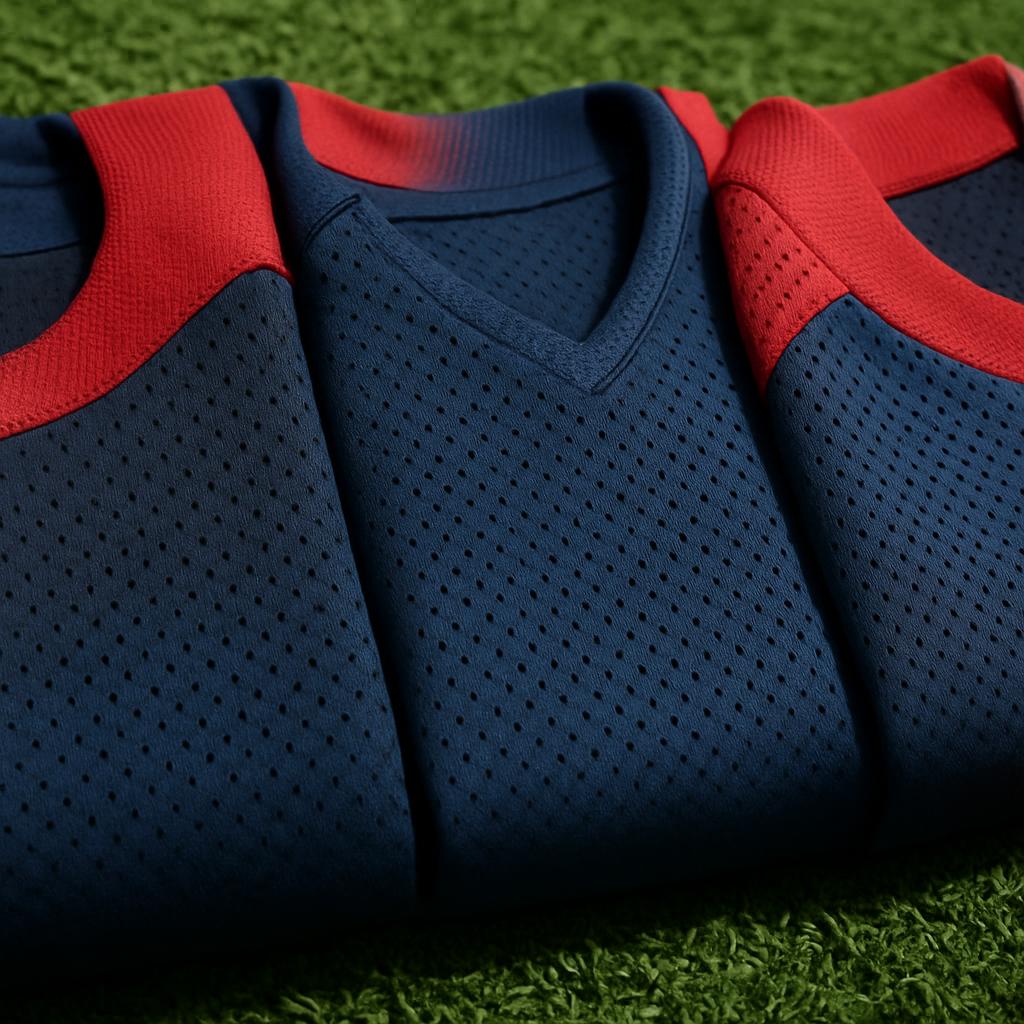
| Mid | Stock branded or partially sublimated kit, mesh side panels | ~$65–90 |
| Premium | Fully custom sublimated Adidas, Under Armour, or New Balance kit with matching warm-up top | ~$90–110+ |
*General market ranges to help you plan — not NSA pricing. Final cost varies by brand, decoration, quantity, and season. Get a quote for a real number.
The line item first-time budgets miss: the goalkeeper kit
Under NFHS soccer rules, which CIF follows, the goalkeeper's jersey must differ distinctly in color from every teammate's — and most programs order it in two colors to cover both home and away matches. That's effectively a second small custom-decoration setup for one or two players, plus a heavier, padded-elbow fabric built for dives, so the per-piece cost for a goalkeeper kit typically runs noticeably higher than a field-player kit even though the quantity is small. Our soccer uniform buying guide covers the color rule in full. Budget for it as its own line, not an afterthought bolted onto the field-kit total.
Quick take: ask for the goalkeeper kit priced separately on your quote — bundling it into a per-player average across the whole roster hides how much of the budget it actually uses.
What actually drives the price
Four levers move a soccer kit quote more than anything else. Understand them and you steer the budget instead of reacting to it.
1. Construction: stock vs. fully custom
A decorated stock jersey is the economical route and still holds up well for JV squads and smaller club teams. A fully custom sublimated jersey — dyed in your exact colors and pattern rather than printed on top of a blank — costs more but gives an unlimited design that won't crack or peel over a season of running and sliding.
2. Decoration: screen print vs. sublimation
Screen print and heat-transfer numbers are the cheapest way to decorate a stock jersey. Full sublimation bakes unlimited color and graphics into the fabric at no per-color charge, which is why most premium varsity kits go that route — see the tradeoffs in more depth in our sublimation vs. traditional decoration comparison.
3. Brand
Quality non-branded lines deliver a sharp, durable kit for less. Adidas and Under Armour custom programs, plus New Balance and Puma, sit higher but bring deeper template libraries and lighter performance mesh built for 80-plus minutes of running. Because a dealer quotes both, you compare value rather than guess.
4. Quantity & minimums
Bigger orders lower the per-unit price. Watch minimums, too: many suppliers require 8–20 pieces per design. At National Sports Apparel there are no minimums, so a full varsity/JV order, a small club team, or a reorder are all fine.
Home and away sets add up — plan for both from the start
NFHS rules default the visiting team to white and the home team to a dark, contrasting color, so most programs price two field-kit colors plus the two goalkeeper colors — four decoration setups total, not one. Confirm your section's exact color procedure with your league before locking artwork; our soccer uniform buying guide walks through the rule in detail. Pricing all four together from the start avoids a rushed, more expensive second order once the schedule is set.
The costs teams forget to budget
- Warm-up tops or jackets — priced separately from the game kit; bundling them into the same order is usually cheaper than a second purchase order later.
- A sizing buffer — order extra in common sizes for late roster additions. Our sizing hub helps you get the roster right the first time.
- Names & extras — player names and captain markings are usually add-ons beyond numbers.
- The rest of the sideline — team bags and spirit wear can be quoted alongside the kits, and a team store can turn spirit wear into a fundraiser instead of a program expense.
How to lower the cost without looking cheap
- Mix tiers by squad — varsity in a premium sublimated kit with a matching warm-up, JV in decorated stock kits from the same color family.
- Order in September to clear the winter production rush and avoid rush fees ahead of mid-November practice.
- Bundle field kits, goalkeeper kits, warm-ups, and spirit wear into one order.
- Ask for both a branded and a non-branded quote and compare value side by side.
Our team store fundraising guide walks through the earnings math if boosters want spirit-wear sales to help offset the uniform budget.
Get a real number, not a guess
Ranges are for planning; a quote is for deciding. A team dealer prices your exact roster — field kits and goalkeeper kits both — across brands and decoration methods so you see real options before the November season opens, not estimates. We've outfitted California soccer programs since 2009, quote branded and non-branded together, and have no order minimums — so you can see what your program actually costs before you commit a dollar.