Before an athletic director or booster even picks a brand, there's a decoration decision that shapes the whole football uniform order: sublimated or tackle twill. It affects durability, how bold your design can be, price, and how long production takes. We build both every season, so here's the honest trade-off breakdown — no hidden pitch for one over the other.
What each method actually is
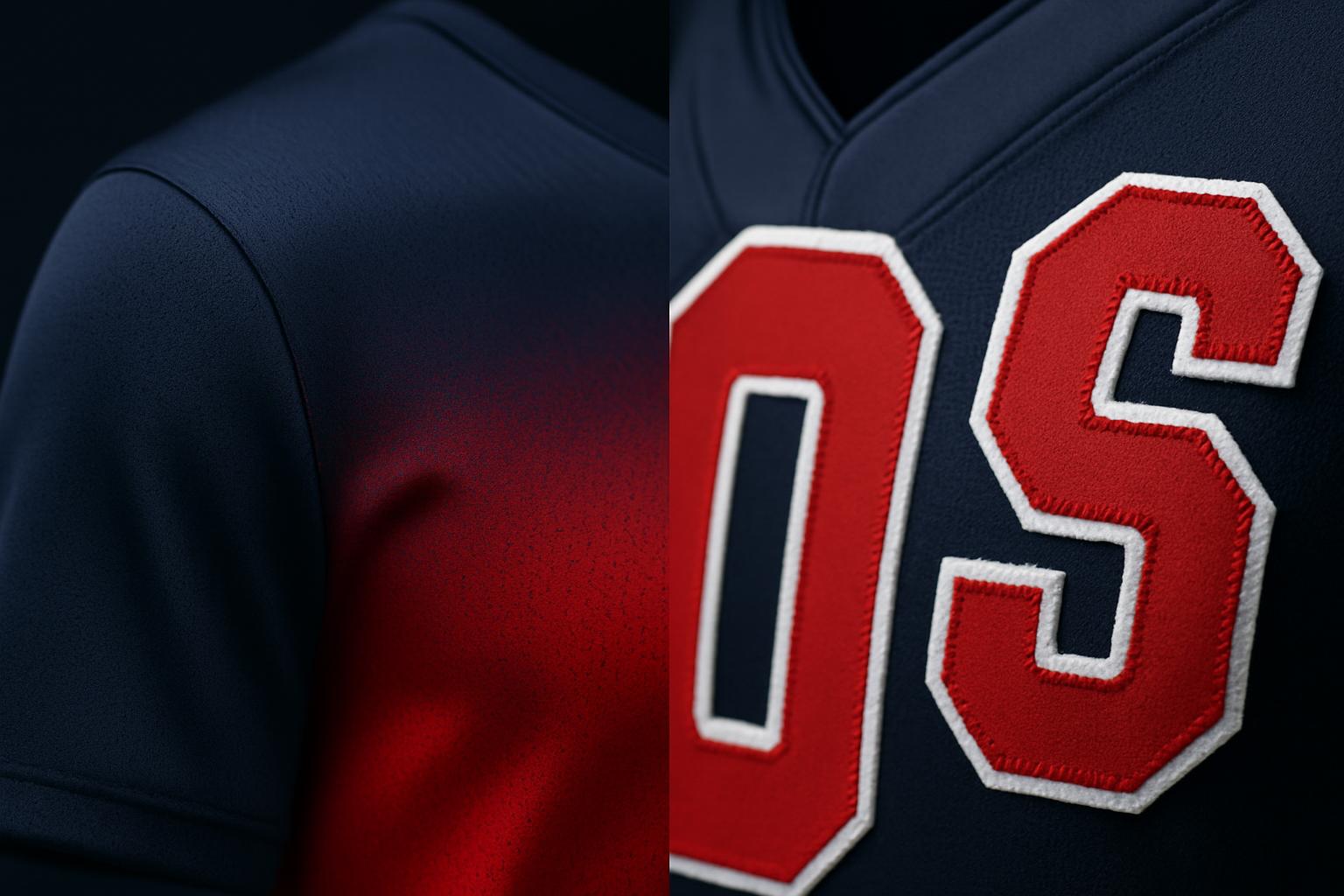
Sublimation dye-prints your design directly into the fabric fibers using heat, so the graphic becomes part of the material itself — nothing sits on top, nothing can peel. It supports unlimited colors, gradients, and photo-real graphics across the entire jersey. Tackle twill is the traditional method: individually cut felt-like letters and numbers, sewn (or heat-pressed with a stitched border) onto a solid or lightly-patterned jersey body. It's the raised, textured look you associate with classic team uniforms.
| Factor | Sublimation | Tackle Twill |
|---|---|---|
| Design freedom | Unlimited colors, gradients, full-body graphics | Limited to the twill color library; best for bold, simple marks |
| Durability | Won't crack, peel, or fade with correct fabric care | Very durable stitching; can loosen at edges after years of heavy wash cycles |
| Weight/feel | Lighter — no added material on the surface | Slightly heavier; raised letters add a small amount of bulk |
| Best fit for | Programs wanting a bold custom graphic identity | Programs wanting the traditional, classic sideline look |
Durability: what actually happens over a season
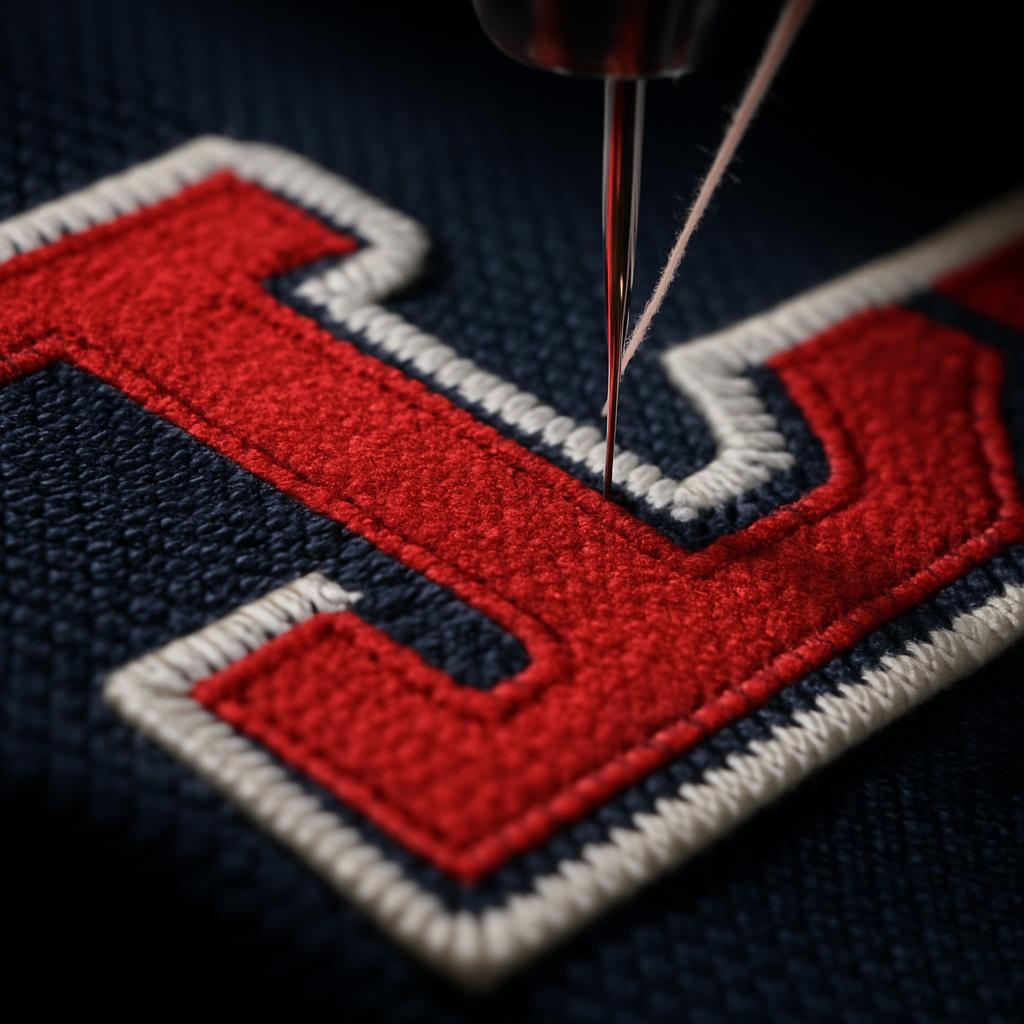
Both methods hold up to a full football season when built correctly. The difference shows up over years of use. A sublimated design is baked into the fabric, so it can't peel, crack, or flake — the only wear you'll see is the fabric itself aging with wash cycles. Tackle twill is stitched down, and while a properly sewn letter lasts for years, the edges are the one spot that can loosen after heavy laundering, pad friction, or repeated pulling (common on numbers that take a lot of contact). Neither is fragile — this is a "which failure mode do you prefer over a decade" question more than a "which one breaks first" one.
Design freedom vs. the classic look
If your program wants a modern, bold graphic identity — camo patterns, gradients, a mascot worked into the shoulder, or a design that would be impossible to sew — sublimation is the only method that gets you there. If your program's identity is a classic block number and a simple wordmark, tackle twill delivers the traditional, textured look that boosters and alumni associate with a "real" football jersey, and it does that job very well without needing sublimation's extra design range.
For a broader look at fabrics, fit, and the full ordering process beyond decoration, see our football uniform buying guide.
Price: complexity matters more than the method
There's no flat rule that one method is cheaper. A simple one- or two-color tackle-twill jersey (block numbers, a basic wordmark) is often less expensive than a fully custom sublimated design with a complex graphic. But a modest sublimated design and a twill jersey with multiple applique colors and a stitched patch can land in a similar range. Decoration complexity — how many colors, how much of the jersey is covered, how intricate the artwork is — moves your total more than sublimation vs. twill by itself. For real numbers across decoration methods and roster sizes, see our football uniform cost guide.
Practical tip: because we build both in-house, we can quote your exact artwork both ways — sublimated and tackle twill — so you're comparing real numbers for your design, not a generic price list.
Turnaround and rules to check
Production timelines are comparable for both methods once artwork is approved — plan on the standard custom-order window rather than expecting one to be meaningfully faster. Both methods can meet NFHS and CIF jersey number-size and color-contrast rules when built to spec; the decoration method itself isn't a compliance issue, but the exact size and contrast requirements can shift year to year, so confirm the current season's rule with your league before finalizing artwork either way.
The middle option: combining both
You don't have to choose only one. A common combination is a sublimated jersey body with sewn tackle-twill numbers — you get the bold, unlimited-color graphic on the fabric plus the raised, traditional texture on the numbers that matter most for team identity. It costs more than either method alone, but it's a popular way to get the best of both without picking a side.
How to decide for your program
- Start with the design, not the method. If the artwork you want requires gradients or photo-real elements, sublimation is the only option — let that decide it before you weigh cost.
- Think in years, not one season. If you're keeping this uniform for 4–6 years, ask how each method holds up under your program's actual wash and laundry routine.
- Get both quoted on your real artwork. A generic "sublimation vs. twill" price comparison is meaningless — quote your specific design both ways.
- Confirm the current rule. Check NFHS/CIF number-size and contrast requirements for the season before locking artwork, regardless of method.
Working with a dealer that builds both
A shop that only offers one decoration method has a built-in reason to steer you toward it. At National Sports Apparel we build both sublimated and tackle-twill jerseys in-house across every major team brand we carry, so our recommendation is based on your design and budget — not which process is easier for us. We've outfitted California high school, club, and college football programs since 2009, with no order minimums for a full roster or a mid-season reorder.