How is a softball uniform order different from baseball?
Softball does not use the baseball rule book. NFHS number size and undergarment colors differ from baseball, and that is the mistake to avoid on a first order. This guide covers those rules, jersey styles, sizing, brands, and the ordering calendar as of 2026.
It's a common assumption for a first-time buyer: softball uniforms follow the same rulebook as baseball. They don't. NFHS publishes separate rule books for the two sports, and a few of the specifics — number size, undergarment colors — are genuinely different. Here's how California high school, club, and college softball programs actually plan a uniform order, and where the baseball comparison breaks down.
The NFHS numbering rule (it's not the same as baseball)
Every softball player needs a number on the back of the jersey in a solid color that contrasts with the shirt, at least 6 inches high — two inches smaller than baseball's 8-inch minimum. A contrasting border up to 1/4 inch wide is allowed, no two players on the same roster can share a number, and 0 and 00 count as identical. It's a small difference, but it matters at the design stage: a number sized to baseball spec isn't wrong, exactly, but a program chasing a tighter, more compact jersey layout has more room to work with than baseball buyers realize.
The undergarment-color rule most buyers miss
This is where softball is actually more flexible than baseball, not less: under NFHS rules, any exposed undergarment — a long-sleeve compression shirt, sliding shorts visible below the pant leg — must be black, white, gray, or a solid school color. Unlike baseball's pitcher-specific sleeve restriction, this applies to every softball player, not just the pitcher, and a player's upper-body undergarment doesn't even have to match their lower-body undergarment in color. Sleeve length can vary from player to player, too — the rule only requires each individual's own sleeves to be roughly consistent in length and free of rags, frays, or slits.
Quick take: don't copy a baseball spec sheet onto a softball order. Confirm the current-season number-size and undergarment-color rules with your section before you lock artwork — sections can adjust NFHS points of emphasis year to year.
Jersey styles and construction
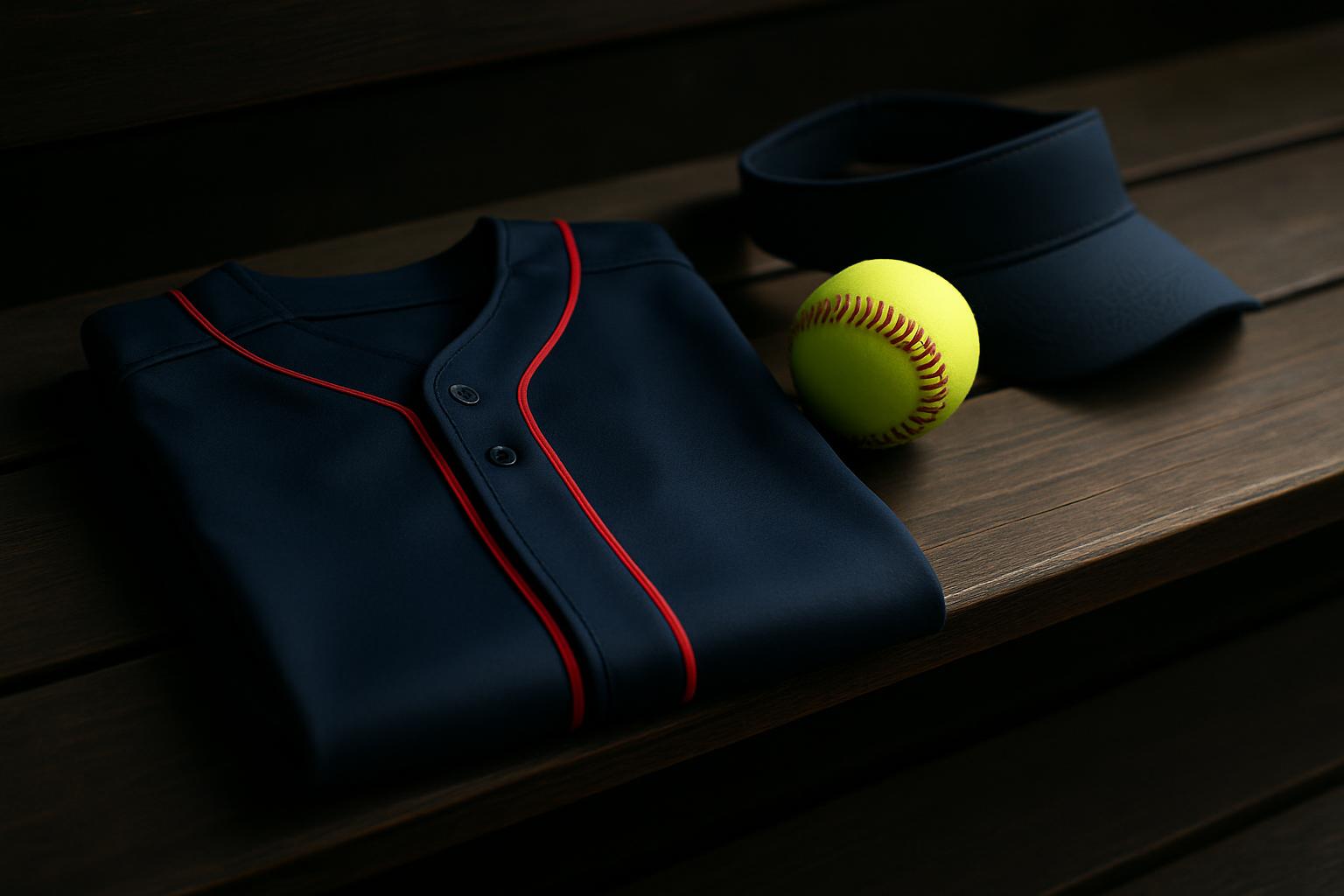
Fastpitch programs run a wider mix of jersey styles than baseball: full-button jerseys for a classic look, sleeveless and racerback cuts that trade the elbow-length sleeve for range of motion at the plate and in the field, and pullover styles that hold up well on a JV or freshman roster with heavier wear. Pair that with sliding shorts sized to the undergarment-color rule above, and a pant style built for the sport rather than adapted from baseball — softball pants see the same sliding stress baseball does, so ordering a size roomier than the jersey fit is worth doing here too.
For decoration, the same tradeoffs apply as anywhere else in our catalog: sublimated print buys more color and pattern freedom (piping, fades, sponsor panels), while tackle-twill lettering holds up longest on a heavy-rotation JV jersey. See our sublimated vs. tackle twill comparison for the full durability-versus-cost breakdown — the same logic carries over from football to softball.
Sizing across three roster levels
Most California softball programs field varsity, JV, and often a freshman team, and a fastpitch roster's build varies as much as any sport we outfit — a corner infielder and a pitcher rarely fit the same cut the same way. A few things that keep sizing clean:
- Measure each roster level on its own rather than scaling a freshman order down from varsity numbers.
- Order sliding shorts and pants a size roomier than the jersey fit for the same reason baseball does — sliding and diving put more stress on lower-body pieces than the jersey ever sees.
- Hold a small sizing buffer for a late roster addition or a call-up between levels once tryouts finish.
Our team uniform sizing hub has size charts and a measuring guide, and the sport-by-sport equipment checklists help confirm visors, sliding shorts, and undergarments are on the order alongside the jersey and pants.
Brands and the softball catalog
Our softball catalog runs on Rawlings for diamond-built fit and durability, alongside Adidas and Under Armour uniform lines and Richardson visors and caps for the dugout. Non-branded options run a lower cost per player for a JV or freshman order without giving up fit or durability. Because we carry all of these side by side, we can quote branded and non-branded together against your actual roster and budget — see the full lineup on our softball catalog page.
The ordering calendar
Softball runs on the same CIF spring calendar as baseball — CIF Southern Section's published 2026-27 calendar lists a February 8, 2027 first-contest date, with practice and preseason conditioning starting weeks earlier. Custom softball uniforms run 6 to 10 weeks from approved art to delivery, and production calendars back up heading into the holidays, so an order placed in October or November lands well ahead of the season instead of racing a December production queue. Confirm your own section's exact practice, acclimatization, and first-contest dates before you set a final order date — they vary by section and can shift year to year.
| Milestone | Typical timing | What it means for ordering |
|---|---|---|
| Fall workouts / conditioning | Sept–Nov | Good window to finalize design and place the order |
| Preseason practice opens | Dec–Jan (section-dependent) | Uniforms should be delivered by now |
| First contests | Early–mid Feb (many sections) | Rush orders get expensive and risky here |
Working with a team dealer
Softball's rulebook overlaps with baseball's on the surface but differs in the details that actually show up on a jersey — number size and undergarment color chief among them. A dealer who treats the two sports as separate rule sets, not a copy-paste job, catches those before the design is locked instead of after production starts. At National Sports Apparel we've outfitted California high school, club, and college softball programs since 2009, with no order minimums across varsity, JV, and freshman rosters alike.