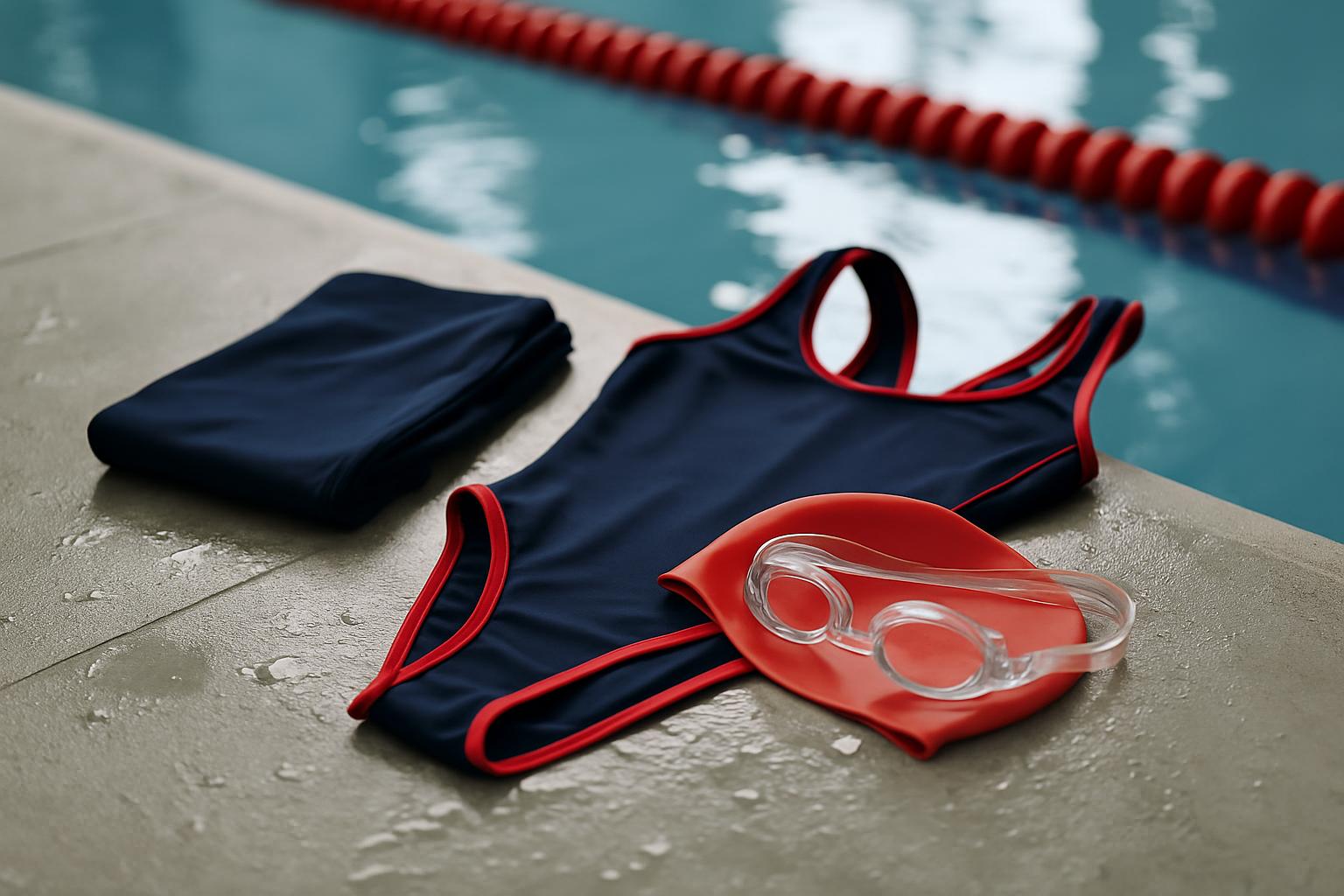
Swim and dive is the one sport where the cheapest suit on the rack and the fastest suit in the club bag can both be the wrong purchase. A high school team suit has to be legal under NFHS construction rules, hold up to chlorine for a full season, and fit swimmers and divers on one roster — and the work of choosing it lands on athletic directors and booster treasurers months before anyone gets wet. With CIF Southern Section's published 2026-27 calendar barring swim and dive meets before February 21, 2027, November and December are when California programs lock the budget. This guide gives you planning ranges, the levers that move the number, and the costs that get missed.
The short answer: typical ranges
Across the market, a custom swim team suit for a high school or club program commonly lands in these rough per-swimmer ranges. Treat them as budgeting guardrails, not a quote — your real number depends on brand, decoration, and how many you order. Caps, parkas, goggles, and spare suits are not included.
| Tier | What you get | Rough per-swimmer range* |
|---|---|---|
| Budget | Quality non-branded jammer, brief, or one-piece in team colors, with a simple printed or applied mark | ~$35–60 |
| Mid | Branded team-program suit in stock team colors, with school name or logo decoration | ~$60–100 |
| Premium | Custom-designed team suit with color-blocking or a sublimated pattern, ordered as a matched set | ~$100–150+ |
*General market ranges to help you plan — not NSA pricing. Final cost varies by brand, decoration, quantity, and season. Get a quote for a real number.
What actually drives the price
Four levers move a swim and dive quote more than anything else.
1. Suit construction and fabric
Chlorine-resistant fabrics and reinforced seams cost more but last through a season of daily practices, which matters because practice wear is what actually ends a suit's life. Under NFHS Rule 3-3, a swimmer's competition suit must be fully permeable to air and water and cannot aid buoyancy or compression, so a legal team suit is not the same product as a compressive club tech suit. Our swim & dive uniform buying guide explains the rule and the checks to make before you order.
2. Decoration and design
Applied or printed school marks are the cheapest route, while custom color-blocking and sublimated patterns raise the per-suit price. Decoration also has a size ceiling: the guide above covers the logo-area limit NFHS applies to suits and caps, so confirm art against the current rule before approving a design.
3. Brand
Quality non-branded suits deliver NFHS-legal construction for less and are common for JV squads. TYR runs a dedicated team program with team pricing, and our swim catalog also includes Speedo, Arena, Adidas, and FINIS. Because a dealer quotes several, you compare value instead of guessing.
4. Quantity & minimums
Bigger orders lower the per-unit price. Watch minimums, too: many suppliers require 8–20 pieces per design. National Sports Apparel has no minimums, so a small club team and a full boys-and-girls program are both fine.
Two swim-specific line items
Spare suits
Competition suits wear faster than most uniforms. Between daily practices, chlorine, and meets, many programs build a few spare suits per size run into the budget rather than reorder mid-season, when production windows are tight.
Separate pricing for the dive squad
Divers follow the same coverage rule as swimmers but are not held to the swimmer-specific fabric requirements, so their suits can be priced as a separate line. Diving boards, stands, and training aids come from a separate equipment supplier, so keep that out of the uniform budget.
The costs teams forget to budget
- Caps — usually the cheapest piece, but every swimmer needs at least one, and they get lost. Buy extras.
- Deck parkas and warm-ups — pool decks are cold between events, and parkas are one of the most-used pieces of gear all season, often the biggest line after the suit.
- Goggles and training gear — often bought by families, but team orders can bundle them in.
- Late roster additions — swim rosters often grow after tryouts, so hold a small buffer of sizes.
- Spirit wear — a team store can turn parent and fan apparel into a fundraiser instead of a program expense.
How to lower the cost without looking cheap
- Mix tiers by squad — varsity in a premium custom suit, JV and novice in decorated stock suits from the same color family.
- Order early — custom orders typically run 6 to 10 weeks, and a November or December order avoids the winter rush before late-February meets.
- Bundle suits, caps, parkas, and spirit wear into one order instead of several purchase orders.
- Ask for both a branded and a non-branded quote and compare value side by side.
Our team store fundraising guide walks through the earnings math if boosters want spirit-wear sales to offset the budget. Browsing options first? Start on our swim & dive page.
Get a real number, not a guess
Ranges are for planning; a quote is for deciding. A team dealer prices your exact roster across brands and decoration methods, and knows which suits pass the NFHS construction check. We've outfitted California programs since 2009, quote branded and non-branded together, and have no order minimums.