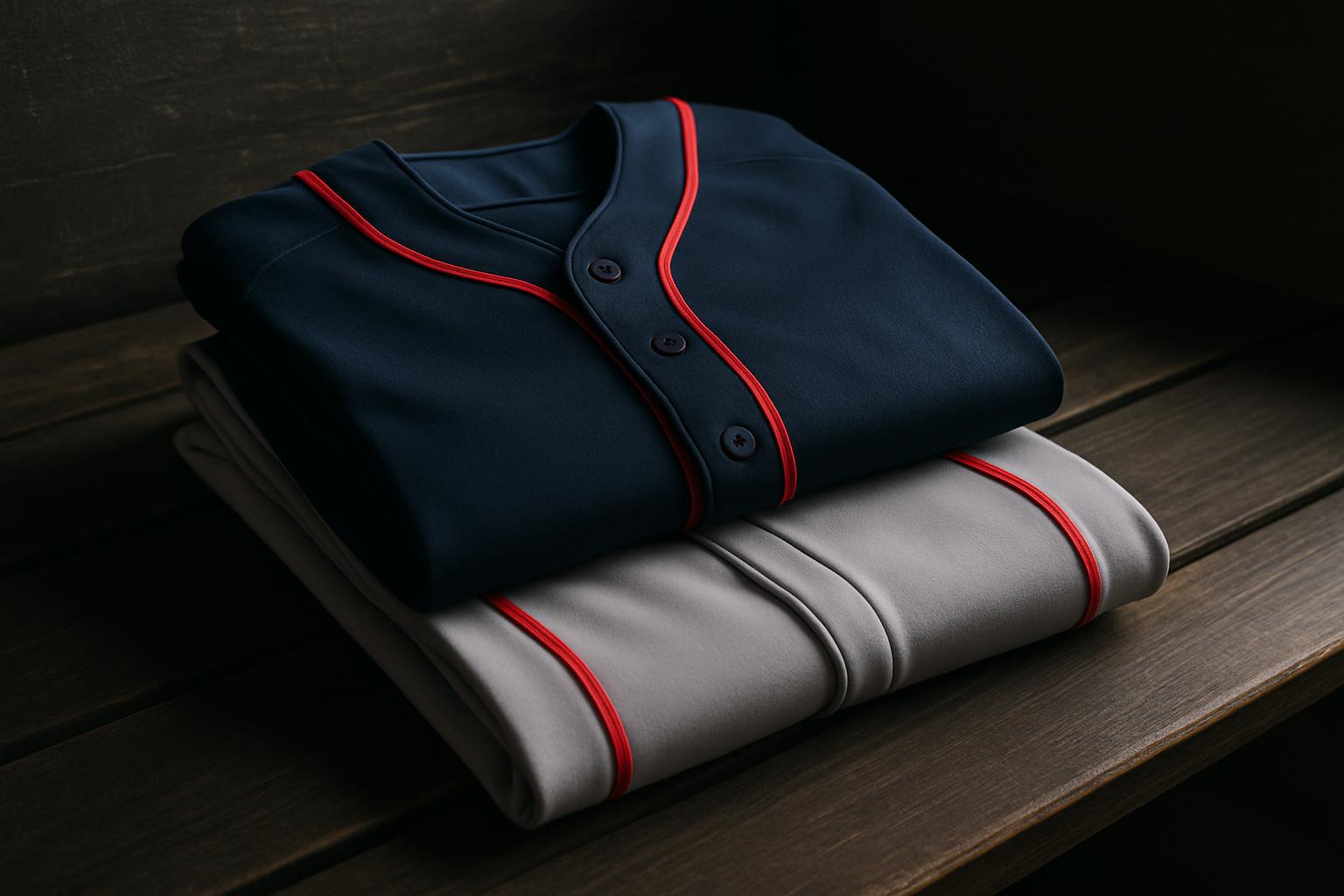
Baseball uniforms have more pieces to price than most sports we outfit — a jersey, pants, and a cap at minimum, often across varsity, JV, and freshman rosters at once. Many CIF sections open the season with first contests in early-to-mid February, and a custom order runs 6 to 10 weeks from approved art to delivery, which is why programs that order in October or November — right now — beat the winter production rush instead of racing it. This guide gives you real planning ranges, the levers that move the number, and the costs a first-time buyer forgets, so a quote doesn't come as a surprise.
The short answer: typical ranges
Across the market, a custom baseball jersey, pants, and cap set for a high school program commonly lands in these rough per-player ranges. Treat them as budgeting guardrails, not a quote — your real number depends on brand, decoration, and how many you order.
| Tier | What you get | Rough per-player range* |
|---|---|---|
| Budget | Quality non-branded pullover jersey and pants, screen-print or heat-transfer numbers | ~$75–105 |
| Mid | Stock branded two-button jersey, piped pants, decorated cap | ~$105–140 |
| Premium | Fully custom sublimated full-button jersey with pinstriping and piping, matching pants and cap | ~$140–170+ |
*General market ranges to help you plan — not NSA pricing. Final cost varies by brand, decoration, quantity, and season. Get a quote for a real number.
What actually drives the price
Four levers move a baseball uniform quote more than anything else. Understand them and you steer the budget instead of reacting to it.
1. Jersey construction: pullover vs. full-button
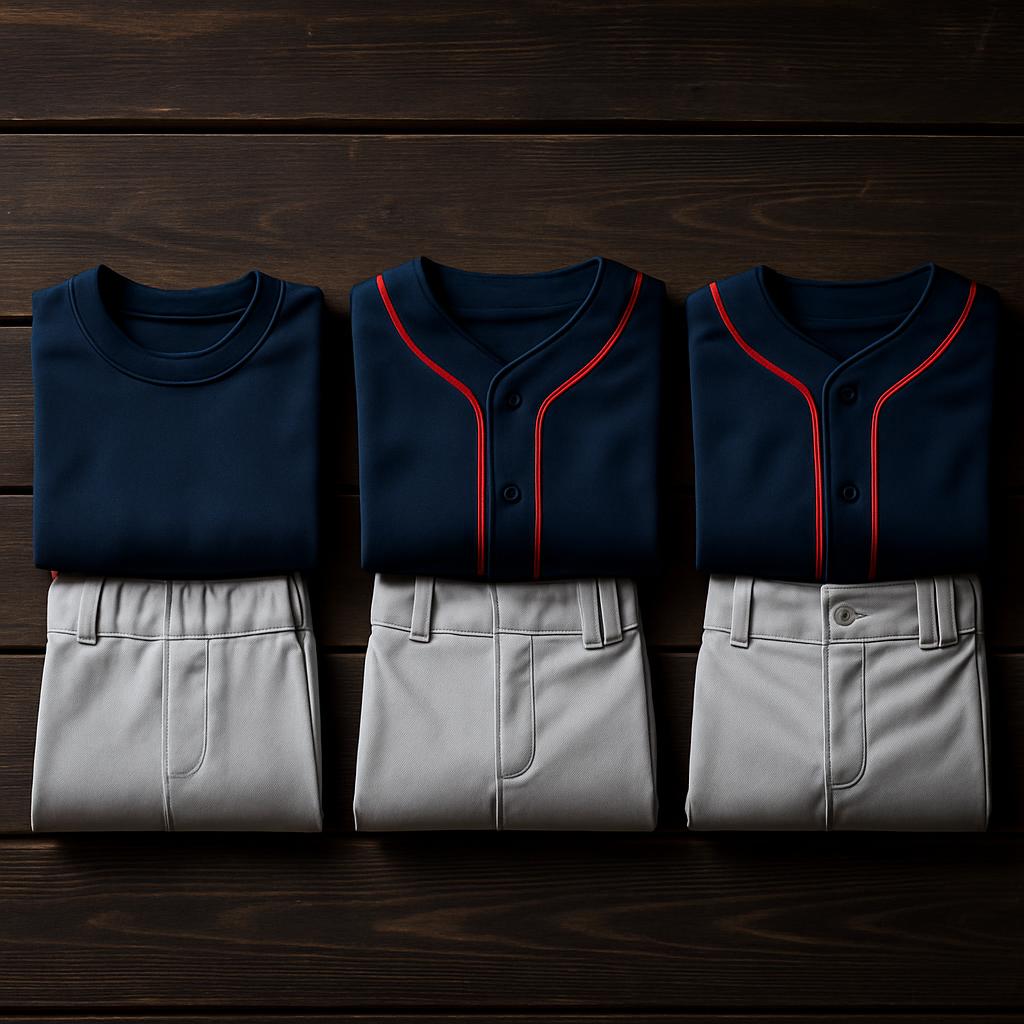
A pullover jersey with no buttons runs the lowest cost and holds up well for a JV or freshman roster that puts more wear on gear through a season. A two-button placket sits in the middle, and a traditional full-button jersey — the classic varsity look — costs more but carries pinstriping and piping detail the other cuts can't match as cleanly. Our baseball uniform buying guide covers the numbering and pitcher-sleeve rules that also factor into a final design.
2. Decoration: screen print vs. sublimation
Screen print and heat-transfer numbers are the cheapest way to decorate a stock jersey. Full sublimation bakes unlimited color, pinstripes, and piping into the fabric at no per-color charge, which is why most premium varsity sets go that route — see the tradeoffs in more depth in our sublimation vs. traditional decoration comparison.
3. Brand
Quality non-branded lines deliver a sharp, durable set for less. Rawlings, a brand built specifically for the diamond, plus Adidas and Under Armour uniform lines sit higher but bring deeper template libraries and performance fabric. Because a dealer quotes both, you compare value rather than guess.
4. Quantity & minimums
Bigger orders lower the per-unit price. Watch minimums, too: many suppliers require 8–20 pieces per design. At National Sports Apparel there are no minimums, so a small call-up reorder or a full varsity/JV/freshman program are both fine.
Pants take more wear than the jersey — plan for it
Baseball pants see far more stress than a football or basketball uniform piece: sliding, diving, and infield play wear through knees and seats faster than a jersey wears out. Many programs budget for a spare pair per player, or at minimum a team-wide reserve set in common sizes, rather than treating pants as a one-and-done purchase for the season. It's a real line item worth asking your dealer to quote separately from the jersey.
The costs teams forget to budget
- Caps — priced separately from the jersey-and-pants set; a fitted or adjustable cap with embroidered lettering typically runs as its own add-on. Our Richardson cap lineup covers the classic dugout look.
- Belts, undershirts & socks — usually quoted as separate line items rather than bundled into the core set, and easy to leave off a first budget.
- A pants reserve — see above; sliding wear means pants often need replacing before the jersey does.
- Three-roster sizing — varsity, JV, and freshman fit profiles differ more than age alone predicts. Our sizing hub and sport-specific equipment checklists help get the roster right the first time.
- The rest of the dugout — bat bags and spirit wear can be quoted alongside the uniform, and a team store can turn spirit wear into a fundraiser instead of a program expense.
How to lower the cost without looking cheap
- Mix tiers by squad — varsity in a premium sublimated set with pinstriping, JV and freshman in decorated pullover jerseys from the same color family.
- Order in October–November to clear the winter production rush ahead of a February season opener.
- Bundle jerseys, pants, caps, and spirit wear into one order instead of three separate purchase orders.
- Ask for both a branded and a non-branded quote and compare value side by side.
Our team store fundraising guide walks through the earnings math if boosters want spirit-wear sales to help offset the uniform budget.
Get a real number, not a guess
Ranges are for planning; a quote is for deciding. A team dealer prices your exact roster across brands and decoration methods so you see real options before the season opens, not estimates. We've outfitted California baseball programs since 2009, quote branded and non-branded together, and have no order minimums — so you can see what your program actually costs before you commit a dollar.